Insights from Acuicy’s Director of Energy Solutions, Hassaan Ali
When energy costs are high, one natural response is to start looking at equipment. Should the pump be replaced? Would a new heat pump reduce consumption? Is there a more efficient refrigeration system available?
Those are all reasonable questions, and sometimes replacement is exactly the right answer. But it is not always the first question I would ask. I would first want to know whether the equipment is actually the problem.
In most operations, there can be a difference between the amount of energy an asset should consume and what it is consuming in practice. That difference can come from the equipment’s condition, how it is maintained, how much it is loaded, how long it operates, or how it is used within the wider system. If you don’t understand that first, you risk using capital to solve a problem that may have a much cheaper solution.
A maintenance problem can also be an energy problem
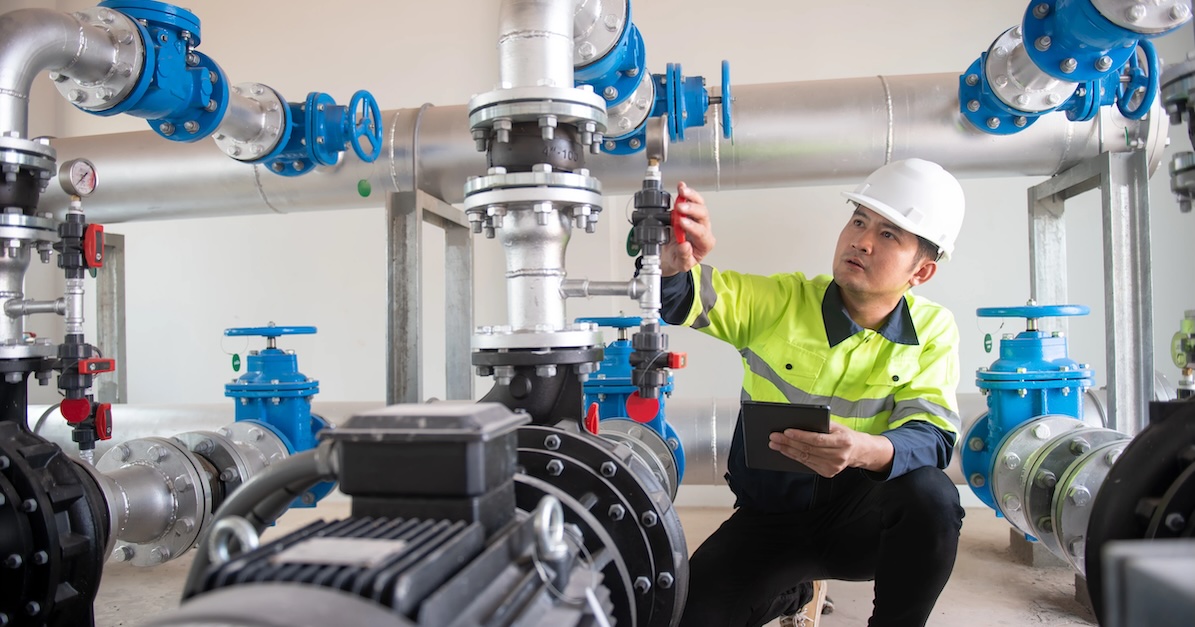
A simple example is a pump with a dirty or clogged filter. As the filter becomes restricted, back pressure increases and the pump has to work harder to maintain the required flow. Nothing necessarily breaks and production may continue as expected, but the pump is using more energy to do the same work.
“Cleaning the filters on the pumps is a great way to save energy. If the filters get clogged, there’s more back pressure, the pump works harder, and the energy bills rise.”
– Hassaan Ali, Director of Energy Solutions, Acuicy
Cleaning a filter is routine maintenance. It is unlikely to be described as an energy-efficiency project or included in a major capital plan, but if the pump is working harder than it needs to, the company is still paying for that additional energy use.
The same issue can show up in controls, equipment settings, operating schedules and assets running outside their optimal load. Individually, these problems may not seem significant enough to attract much attention, but across a larger operation they can become meaningful.
Is the equipment inefficient, or is it being operated inefficiently?
That distinction becomes important when companies start considering capital investments.
If a piece of equipment has high energy consumption, replacing it with a more efficient asset may seem like the obvious answer. But if part of that consumption is being caused by maintenance, operating conditions or poor controls, the business may be evaluating the replacement against an inefficient baseline.
The replacement may still be justified. The important thing is understanding why.
Is the asset itself inefficient, or is the way it is being operated creating the problem? Those are different situations, and they do not necessarily require the same solution or the same level of capital.
The same equipment can have very different economics
Equipment specifications only tell part of the story.
Consider two similar motors. One operates at a relatively constant load around the clock, while the other runs at significantly different loads throughout the day. A variable frequency drive can produce meaningful savings when a motor frequently operates below full load because it allows output to adjust with demand. On a motor operating continuously at a stable load, the economics may be very different.
This is why generic lists of energy-saving recommendations only go so far. Equipment type matters, but so do duty cycle, load, operating hours, condition and local energy costs. Recommendations are more useful when they reflect how the asset is actually used.
Diagnose first, then decide where capital belongs
When I review an energy-intensive operation, I don’t start by asking which equipment should be replaced. I would start by understanding where energy is being used, how the major assets are operating, and whether there are meaningful differences between expected and actual performance.
From there, some opportunities may be addressed through operating changes, maintenance, controls or relatively modest interventions. Others will require larger capital investments.
After the smaller projects that pay back quickly are completed, replacing equipment might clearly be the right decision. The point is to make that decision with a better understanding of the existing operation rather than assuming high energy use automatically means new equipment is required.
Energy efficiency is often presented as a technology problem, but in practice it is also an operations problem and a capital allocation problem.
Before committing capital, it is worth understanding which problem you are actually trying to solve.
Ready to find out how? Book a call with our team today.